College Board AP® Environmental ScienceGUIDE DECK · 官方考纲对照版
CED Unit 3 · 知识引导学习册
Populations
种群 · 引导型学习册
I'm not here to teach you. I'm here to tell you where to learn it — 9 CED topics, each with the official College Board learning objective, the graph you'll be asked to read, and a direct link to the best video, past paper or vocab set for it.
📊 10–15% of the exam📖 9 topics (3.1–3.9)📈 读图单元 · 曲线题高发🧮 Rule of 70 必考计算
03
GUIDE DECK · 22 SLIDES · AP-STUDY.COM
Unit 3 · 1 / 22
College Board AP® Environmental ScienceUNIT 3 · POPULATIONS
🧭 考纲导航 · Unit Overview
One unit, one question: why does a population stop growing?
Unit 3 is where APES starts asking you to read graphs — survivorship curves, growth curves, age-structure pyramids, and the demographic transition. Every one of them is worth multiple-choice points, and the Rule of 70 is one of the few guaranteed calculations on the exam. It also hands Unit 9 its vocabulary: overshoot, carrying capacity, and per-capita impact.
📊 Exam Weight
10–15%
📖 CED Topics
3.1 – 3.9
⭐ Difficulty
⭐⭐⭐ Data-heavy
📝 Common Q's
MCQ 读图 · FRQ #2 计算
大概念 · Enduring Understandings(CED 原文)
ERT-3Populations change over time in reaction to a variety of factors.
EIN-1Human populations change in reaction to a variety of factors, including social and cultural factors.
CED 知识点清单 · All 9 topics
3.1Generalist and Specialist Speciesbroad vs narrow niche
3.2K-Selected r-Selected Speciesfew+cared vs many+uncared
3.3Survivorship CurvesType I / II / III
3.4Carrying CapacityK · overshoot · dieback
3.5Population Growth and Resource AvailabilityJ vs S · Rule of 70
3.6Age Structure Diagramspyramid · column · urn
3.7Total Fertility RateTFR · replacement 2.1
3.8Human Population DynamicsRule of 70 · IPAT
3.9Demographic Transition4 stages · CDR drops first
建议学习路径 · Recommended path
- 通读本册一遍(约 25 分钟),只看每页的 核心要点 和 LO 编码
- 看 Khan Academy 的 Populations 单元,把三张曲线图自己画一遍(不是临摹,是默写)
- 把 Rule of 70 和人口增长率公式各做 5 道题,写步骤带单位
- 回本站真题库刷 Unit 3 的 MCQ,错的回到对应引导页重看
⚡ AP Study Hub · ace your exams at ap-study.comUNIT 3 · GUIDE DECK
Unit 3 · 2 / 22
College Board AP® Environmental ScienceUNIT 3 · CED TOPIC 3.1
✏️Your notes
🐭
CED Topic 3.1 · 知识引导
Generalist and Specialist Species
ERT-3.ALearning Objective · 学习目标
Identify differences between generalist and specialist species.
区分广布种与特化种。

A raccoon: the textbook generalist — eats anything, lives anywhere
ESSENTIAL KNOWLEDGE · CED 原文(1 条,点开对照)
- ERT-3.A.1Specialist species tend to be advantaged in habitats that remain constant, while generalist species tend to be advantaged in habitats that are changing.
核心要点 · What actually gets tested
- Generalists have a broad niche — many foods, many habitats → win when the habitat is changing
- Specialists have a narrow niche — one food, one habitat → win when the habitat stays constant
- Habitat disturbance kills specialists first; they cannot switch
- Invasive species are almost always generalists — that's exactly why they invade
- 经典例子:raccoon / rat / coyote(广布)vs panda / koala / coral(特化)
Niche:物种的「职业」—— 它吃什么、住哪、什么时候活动、跟谁竞争。niche 越窄,越脆。
官方关键词 · Key Terms
generalist species 广布种specialist species 特化种niche 生态位
📊 Weight
10–15%
⭐ Priority
⭐⭐⭐⭐
📝 Tested as
MCQ data
CED Suggested Skill1.BExplain environmental concepts and processes
去哪学 · WHERE TO LEARN
💡
引导提问:深圳城里同时住着老鼠和某个只吃一种树的昆虫。旧城改造开工,谁先消失?为什么 APES 年年考这个逻辑?
⚡ AP Study Hub · ace your exams at ap-study.comUNIT 3 · GUIDE DECK
Unit 3 · 3 / 22
College Board AP® Environmental ScienceUNIT 3 · CED TOPIC 3.2
✏️Your notes
🐘
CED Topic 3.2 · 知识引导
K-Selected r-Selected Species
ERT-3.BLearning Objective · 学习目标
Identify differences between K- and r- selected species.
区分 K 选择与 r 选择物种。
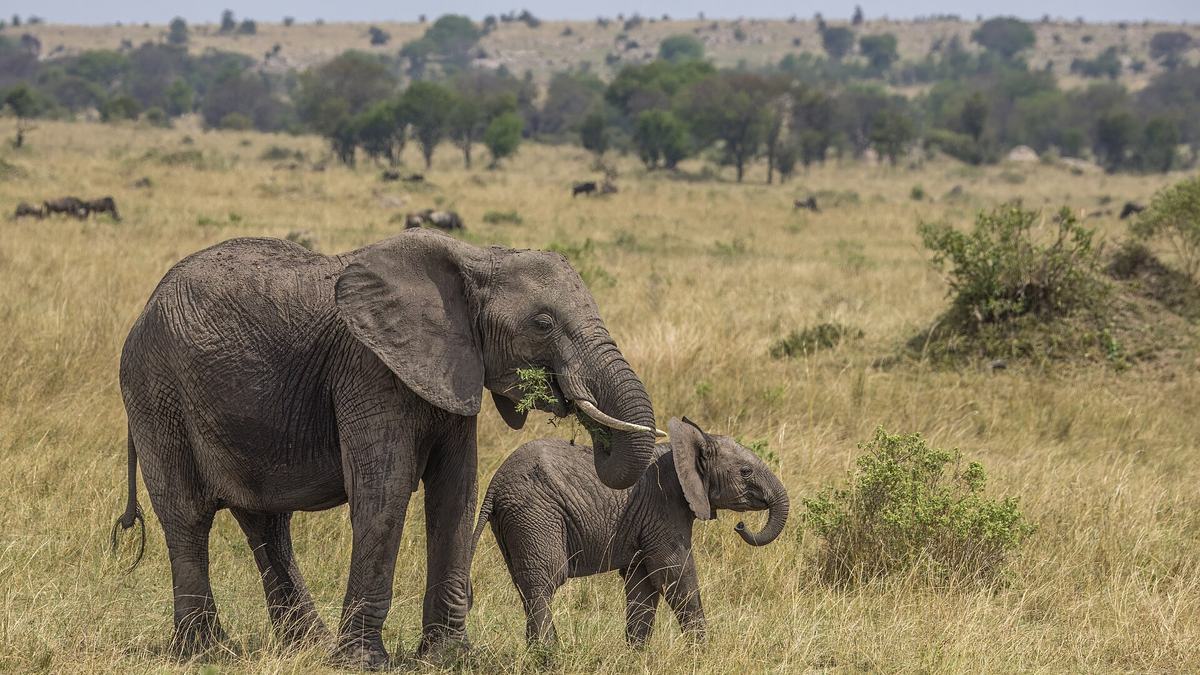
An elephant calf: few offspring, years of parental care — classic K-selected
ESSENTIAL KNOWLEDGE · CED 原文(5 条,点开对照)
- ERT-3.B.1K-selected species tend to be large, have few offspring per reproduction event, live in stable environments, expend significant energy for each offspring, mature after many years of extended youth and parental care, have long life spans/life expectancy, and reproduce more than once in their…
- ERT-3.B.2R-selected species tend to be small, have many offspring, expend or invest minimal energy for each offspring, mature early, have short life spans, and may reproduce only once in their lifetime. Competition for resources in r-selected species’ habitats is typically relatively low.
- ERT-3.B.3Biotic potential refers to the maximum reproductive rate of a population in ideal conditions.
- ERT-3.B.4Many species have reproductive strategies that are not uniquely r-selected or K-selected, or they change in different conditions at different times.
- ERT-3.B.5K-selected species are typically more adversely affected by invasive species than r-selected species, which are minimally affected by invasive species. Most invasive species are r-selected species.
核心要点 · What actually gets tested
- K-selected:体型大、寿命长、成熟晚、后代少、投入大量抚育(象、鲸、人)
- r-selected:体型小、寿命短、成熟早、后代极多、几乎不抚育(鼠、昆虫、多数鱼)
- Biotic potential = 理想条件下的最大繁殖速率(r 选的物种这项爆表)
- 记忆法:K = Keep care(少生优育),r = rapid reproduction
- 入侵物种几乎都是 r-selected;濒危物种几乎都是 K-selected —— 这句几乎每年考
Biotic potential:理想条件下(食物无限、无天敌、无病害)一个种群能达到的最大繁殖速率。现实中永远达不到。
官方关键词 · Key Terms
K-selected species K 选择物种r-selected species r 选择物种biotic potential 生物潜能parental care 亲代抚育
📊 Weight
10–15%
⭐ Priority
⭐⭐⭐⭐⭐
📝 Tested as
MCQ 情境判断
AP® EXAM TIP
看到题目给「产生 10,000 颗卵、亲代不照顾」,直接选 r-selected + Type III 存活曲线。给「每 3–5 年一胎、抚育数年」,选 K-selected + Type I。这两个是捆绑出现的。
CED Suggested Skill5.ADescribe patterns or trends in data
去哪学 · WHERE TO LEARN
💡
引导提问:为什么捕捞业最先崩溃的总是鲨鱼(K 选择)而不是沙丁鱼(r 选择)?把答案压成一句话 —— 这就是 FRQ 的一个得分点。
⚡ AP Study Hub · ace your exams at ap-study.comUNIT 3 · GUIDE DECK
Unit 3 · 4 / 22
College Board AP® Environmental ScienceUNIT 3 · CED TOPIC 3.3
✏️Your notes
📉
CED Topic 3.3 · 知识引导
Survivorship Curves
ERT-3.CLearning Objective · 学习目标
Explain survivorship curves.
解释存活曲线。
ESSENTIAL KNOWLEDGE · CED 原文(2 条,点开对照)
- ERT-3.C.1A survivorship curve is a line that displays the relative survival rates of a cohort—a group of individuals of the same age—in a population, from birth to the maximum age reached by any one cohort member. There are Type I, Type II, and Type III curves.
- ERT-3.C.2Survivorship curves differ for K-selected and r-selected species, with K-selected species typically following a Type I or Type II curve and r-selected species following a Type III curve.
核心要点 · What actually gets tested
- Type I:早期几乎不死,老了才大批死 —— K-selected(人、象)
- Type II:各年龄段死亡率恒定(鸟类、部分蜥蜴)
- Type III:幼体大批死亡,活下来的很少但很长寿 —— r-selected(鱼、海龟、多数树)
- Cohort = 同一批出生的个体,被追踪一辈子
- ⚠️ Y 轴常常是对数刻度 —— 直线下降 ≠ 匀速死亡,读图前先看轴
Cohort:同一时间出生的一批个体。存活曲线追的就是这一个 cohort 从出生到全死的过程。
官方关键词 · Key Terms
survivorship curve 存活曲线cohort 同龄群mortality rate 死亡率log scale 对数刻度
📊 Weight
10–15%
⭐ Priority
⭐⭐⭐⭐
📝 Tested as
MCQ 读图
AP® EXAM TIP
题目给图表时,先找 Y 轴是不是 log scale。很多学生把 log 轴上的直线读成「Type II 恒定死亡率」,实际那是 Type III。这一分丢得非常冤。
CED Suggested Skill5.CExplain patterns and trends in data to draw conclusions
去哪学 · WHERE TO LEARN
💡
引导提问:人类的存活曲线在过去 200 年里从接近 Type II 变成了 Type I。是什么把中间的死亡「推」到了老年?
⚡ AP Study Hub · ace your exams at ap-study.comUNIT 3 · GUIDE DECK
Unit 3 · 5 / 22
College Board AP® Environmental ScienceUNIT 3 · PROGRESS CHECK 1
🧭
模块导航 · Checkpoint
你已经拿下 3 个 topic
✅ 已完成 · Covered
- 3.1 Generalist and Specialist Species
- 3.2 K-Selected r-Selected Species
- 3.3 Survivorship Curves
⏭️ 接下来 · Up next
- 3.4 Carrying Capacity
- 3.5 Population Growth and Resource Availability
- 3.6 Age Structure Diagrams
怎么判断你真的会了:合上这一页,能把上面每个 topic 的 CED Learning Objective 编码对应的那句话用自己的话说出来,
并且能举出一个书上没有的例子 —— 这就够了。说不出来的,点回那一页的资源链接,别硬背。
去哪学 · WHERE TO LEARN
⚡ AP Study Hub · ace your exams at ap-study.comUNIT 3 · GUIDE DECK
Unit 3 · 6 / 22
College Board AP® Environmental ScienceUNIT 3 · CED TOPIC 3.4
✏️Your notes
🦌
CED Topic 3.4 · 知识引导
Carrying Capacity
ERT-3.DLearning Objective · 学习目标
Describe carrying capacity.
描述环境容纳量。
ERT-3.ELearning Objective · 学习目标
Describe the impact of carrying capacity on ecosystems.
描述环境容纳量对生态系统的影响。
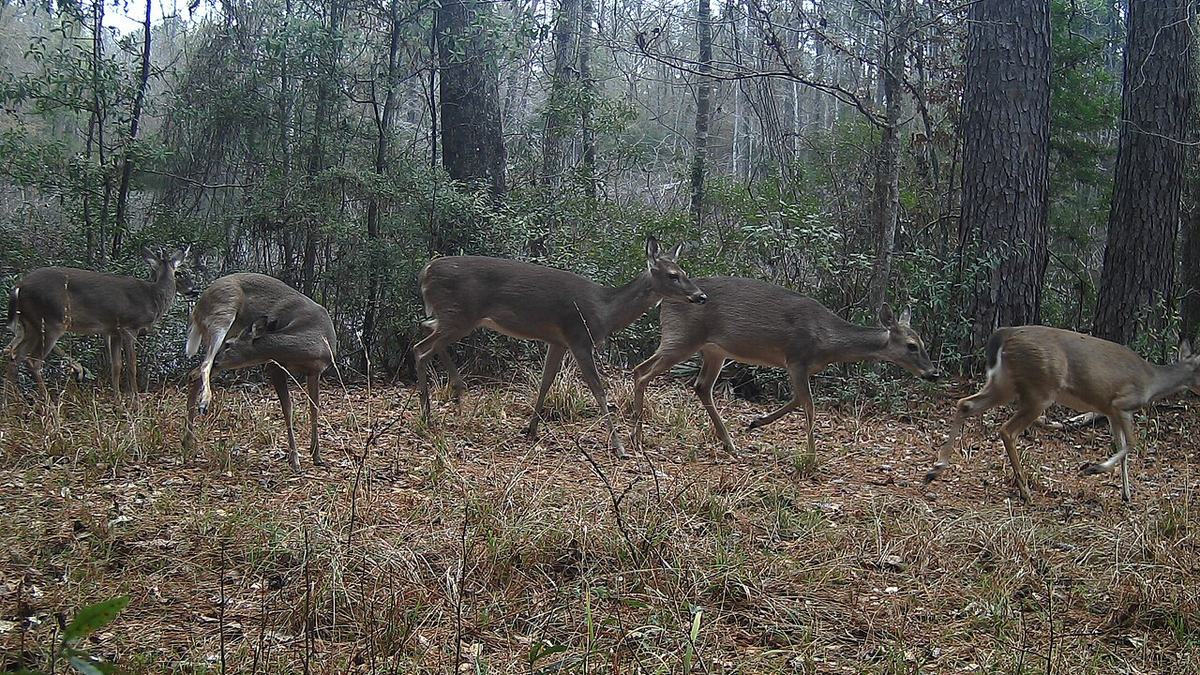
A deer herd — the textbook case of overshoot and dieback
ESSENTIAL KNOWLEDGE · CED 原文(2 条,点开对照)
- ERT-3.D.1When a population exceeds its carrying capacity (carrying capacity can be denoted as K), overshoot occurs. There are environmental impacts of population overshoot, including resource depletion.
- ERT-3.E.1A major ecological effect of population overshoot is dieback of the population (often severe to catastrophic) because the lack of available resources leads to famine, disease, and/or conflict.
核心要点 · What actually gets tested
- Carrying capacity (K) = 环境能长期供养的最大种群数量
- Overshoot:短时间冲过 K → 资源被透支
- Dieback:资源崩掉后种群骤降(不是缓慢回落,是崩)
- 限制因素:食物、水、空间、疾病、捕食、光照 —— 任意一项先到顶,就决定了 K
- 人类同样受 K 约束,只是技术把 K 抬高了(Unit 9 会回扣这点)
Dieback:种群冲过 K 之后的急剧下降。写 FRQ 时用 dieback,别写 "population goes down"。
官方关键词 · Key Terms
carrying capacity 环境容纳量overshoot 超限dieback 崩溃limiting factor 限制因素
📊 Weight
10–15%
⭐ Priority
⭐⭐⭐⭐⭐
📝 Tested as
MCQ 图 + FRQ
AP® EXAM TIP
MCQ 常给一张「冲过 K 又掉下来」的图问你叫什么。答案是 overshoot followed by dieback,两个词都要写 —— 只写其中一个拿不到分。
CED Suggested Skill5.EExplain what the data implies or illustrates about environmental issues
去哪学 · WHERE TO LEARN
💡
引导提问:一片草原的 K 是 500 只鹿,现在有 800 只。描述接下来 2 年会发生什么 —— 用上 overshoot 和 dieback 两个词。
⚡ AP Study Hub · ace your exams at ap-study.comUNIT 3 · GUIDE DECK
Unit 3 · 7 / 22
College Board AP® Environmental ScienceUNIT 3 · CED TOPIC 3.5
✏️Your notes
📈
CED Topic 3.5 · 知识引导
Population Growth and Resource Availability
ERT-3.FLearning Objective · 学习目标
Explain how resource availability affects population growth.
解释资源可得性如何影响种群增长。
ESSENTIAL KNOWLEDGE · CED 原文(4 条,点开对照)
- ERT-3.F.1Population growth is limited by environmental factors, especially by the available resources and space.
- ERT-3.F.2Resource availability and the total resource base are limited and finite over all scales of time.
- ERT-3.F.3When the resources needed by a population for growth are abundant, population growth usually accelerates.
- ERT-3.F.5When the resource base of a population shrinks, the increased potential for unequal distribution of resources will ultimately result in increased mortality, decreased fecundity, or both, resulting in population growth declining to, or below, carrying capacity.
核心要点 · What actually gets tested
- Exponential growth(J 型):资源无限 → 越涨越快
- Logistic growth(S 型):资源有限 → 接近 K 时增速放缓并稳定
- 增长率 = (出生 + 迁入) − (死亡 + 迁出)
- 百分比增长率 = ΔN ÷ N × 100%
- 🧮 Rule of 70:翻倍年数 = 70 ÷ 年增长率(%)。这是 Unit 3 最稳的一道计算题。
Rule of 70:doubling time (years) ≈ 70 ÷ 年增长率(%)。年增 2% → 70/2 = 35 年翻倍。FRQ 里必须写出公式 + 代入 + 带单位,只给答案不给步骤会被扣。
官方关键词 · Key Terms
exponential growth 指数增长logistic growth 逻辑增长growth rate 增长率Rule of 70 70 法则
📊 Weight
10–15%
⭐ Priority
⭐⭐⭐⭐⭐
📝 Tested as
计算 + 读图
AP® EXAM TIP
Rule of 70 的步骤分值是这样给的:① 写公式 ② 代入数字 ③ 得数带单位(years)。三步缺一步扣一分。计算器是允许带的,但不写步骤照样零分。
CED Suggested Skill6.BApply mathematical relationships to solve a problem, with work shown
去哪学 · WHERE TO LEARN
💡
引导提问:一个国家年增长 1.4%,另一个 3.5%。分别多少年翻倍?差距是多少年?(算完再去第 17 页对答案)
⚡ AP Study Hub · ace your exams at ap-study.comUNIT 3 · GUIDE DECK
Unit 3 · 8 / 22
College Board AP® Environmental ScienceUNIT 3 · CED TOPIC 3.6
✏️Your notes
🧓
CED Topic 3.6 · 知识引导
Age Structure Diagrams
EIN-1.ALearning Objective · 学习目标
Explain age structure diagrams.
解释年龄结构图。
ESSENTIAL KNOWLEDGE · CED 原文(2 条,点开对照)
- EIN-1.A.1Population growth rates can be interpreted from age structure diagrams by the shape of the structure.
- EIN-1.A.2A rapidly growing population will, as a rule, have a higher proportion of younger people compared to stable or declining populations.
核心要点 · What actually gets tested
- 三个年龄组:pre-reproductive 0–14、reproductive 15–44、post-reproductive 45+
- 金字塔型(底宽)→ 快速增长(尼日利亚、肯尼亚)
- 柱型(上下差不多)→ 稳定(美国)
- 壶型 / 倒金字塔(底窄)→ 收缩(日本、意大利)
- 读图题的关键:看底部有多宽 —— 底部宽意味着未来会有大量人口进入生育年龄,增长还没结束
Population momentum:即使每个家庭立刻只生 2 个孩子,人口仍会因为「年轻人太多」而继续增长几十年。这就解释了为什么柱型国家也不会立刻停止增长。
官方关键词 · Key Terms
age structure diagram 年龄结构图pre-reproductive 生育前期population momentum 人口惯性dependency ratio 抚养比
📊 Weight
10–15%
⭐ Priority
⭐⭐⭐⭐
📝 Tested as
MCQ 读图
AP® EXAM TIP
问「接下来 30 年人口会怎么变」时,不要看现在的人口总数,要看金字塔底部。底部宽 = 还会涨,哪怕 TFR 已经降下来了。
CED Suggested Skill5.CExplain patterns and trends in data to draw conclusions
去哪学 · WHERE TO LEARN
💡
引导提问:中国的年龄结构图现在是偏柱型还是偏壶型?这对 2050 年的劳动力意味着什么?
⚡ AP Study Hub · ace your exams at ap-study.comUNIT 3 · GUIDE DECK
Unit 3 · 9 / 22
College Board AP® Environmental ScienceUNIT 3 · PROGRESS CHECK 2
🧭
模块导航 · Checkpoint
你已经拿下 6 个 topic
✅ 已完成 · Covered
- 3.1 Generalist and Specialist Species
- 3.2 K-Selected r-Selected Species
- 3.3 Survivorship Curves
- 3.4 Carrying Capacity
- 3.5 Population Growth and Resource Availability
- 3.6 Age Structure Diagrams
⏭️ 接下来 · Up next
- 3.7 Total Fertility Rate
- 3.8 Human Population Dynamics
- 3.9 Demographic Transition
怎么判断你真的会了:合上这一页,能把上面每个 topic 的 CED Learning Objective 编码对应的那句话用自己的话说出来,
并且能举出一个书上没有的例子 —— 这就够了。说不出来的,点回那一页的资源链接,别硬背。
去哪学 · WHERE TO LEARN
⚡ AP Study Hub · ace your exams at ap-study.comUNIT 3 · GUIDE DECK
Unit 3 · 10 / 22
College Board AP® Environmental ScienceUNIT 3 · CED TOPIC 3.7
✏️Your notes
👶
CED Topic 3.7 · 知识引导
Total Fertility Rate
EIN-1.BLearning Objective · 学习目标
Explain factors that affect total fertility rate in human populations.
解释影响总和生育率的因素。

Girls in school — the single strongest lever on total fertility rate
ESSENTIAL KNOWLEDGE · CED 原文(3 条,点开对照)
- EIN-1.B.1T otal fertility rate (TFR) is affected by the age at which females have their first child, educational opportunities for females, access to family planning, and government acts and policies.
- EIN-1.B.2If fertility rate is at replacement levels, a population is considered relatively stable.
- EIN-1.B.3Factors associated with infant mortality rates include whether mothers have access to good healthcare and nutrition. Changes in these factors can lead to changes in infant mortality rates over time.
核心要点 · What actually gets tested
- TFR = 一名女性一生中平均生育的子女数
- Replacement level ≈ 2.1(发达国家);发展中国家更高(约 2.5–3.3,因为婴儿死亡率更高)
- TFR > 更替水平 → 人口增长;TFR < 更替水平 → 人口最终下降
- 压低 TFR 的因素:女性受教育年限、城市化、避孕可及性、养育成本、婴儿死亡率下降
- ⭐ APES 官方立场:降低人口增长最有效的手段是提高女性教育水平。这是 FRQ 的高频得分点
Replacement level fertility:让人口规模刚好不增不减的 TFR。发达国家约 2.1(多出的 0.1 补偿夭折风险)。写成 2.0 会失分。
官方关键词 · Key Terms
total fertility rate (TFR) 总和生育率replacement level 更替水平infant mortality 婴儿死亡率crude birth rate 粗出生率
📊 Weight
10–15%
⭐ Priority
⭐⭐⭐⭐⭐
📝 Tested as
MCQ + FRQ
AP® EXAM TIP
FRQ 问「如何降低人口增长」时,写 increasing educational access for women 或 empowering women。写 "family planning" 太笼统,写 "one-child policy" 会被认为是强制手段,不得分。
CED Suggested Skill5.ADescribe patterns or trends in data
去哪学 · WHERE TO LEARN
💡
引导提问:为什么发达国家的更替水平是 2.1 而不是 2.0?多出来的 0.1 在补偿什么?
⚡ AP Study Hub · ace your exams at ap-study.comUNIT 3 · GUIDE DECK
Unit 3 · 11 / 22
College Board AP® Environmental ScienceUNIT 3 · CED TOPIC 3.8
✏️Your notes
🌆
CED Topic 3.8 · 知识引导
Human Population Dynamics
EIN-1.CLearning Objective · 学习目标
Explain how human populations experience growth and decline.
解释人类人口如何经历增长与下降。

Density is not the same as impact — IPAT separates the two
ESSENTIAL KNOWLEDGE · CED 原文(4 条,点开对照)
- EIN-1.C.1Birth rates, infant mortality rates, and overall death rates, access to family planning, access to good nutrition, access to education, and postponement of marriage all affect whether a human population is growing or declining.
- EIN-1.C.2Factors limiting global human population include the Earth’s carrying capacity and the basic factors that limit human population growth as set forth by Malthusian theory.
- EIN-1.C.3Population growth can be affected by both density-independent factors, such as major storms, fires, heat waves, or droughts, and density-dependent factors, such as access to clean water and air, food availability, disease transmission, or territory size.
- EIN-1.C.4The rule of 70 states that dividing the number 70 by the percentage population growth rate approximates the population’s doubling time.
核心要点 · What actually gets tested
- 人口增长在全球极不均衡:增速最快的是最不发达国家
- 🧮 翻倍时间用 Rule of 70:70 ÷ 年增长率(%)
- 但人口多 ≠ 影响大。看 IPAT:I = P × A × T
- Population 人口 · Affluence 富裕度(人均消费)· Technology 技术
- 美国人均生态足迹约为印度的 8–10 倍 —— 同样一个人,影响天差地别
IPAT equation:Impact = Population × Affluence × Technology。FRQ 用它解释「为什么人口少的国家污染反而更严重」。这是把 Unit 3 和 Unit 6、9 串起来的那根线。
官方关键词 · Key Terms
IPAT equation IPAT 方程ecological footprint 生态足迹doubling time 翻倍时间per capita 人均
📊 Weight
10–15%
⭐ Priority
⭐⭐⭐⭐
📝 Tested as
MCQ + FRQ
AP® EXAM TIP
别写 "more people = more pollution"。APES 要的是具体机制:per capita consumption、ecological footprint、IPAT。笼统表述一律不得分。
CED Suggested Skill7.ADescribe environmental problems
去哪学 · WHERE TO LEARN
💡
引导提问:一个 3 亿人口的高消费国家 vs 一个 13 亿人口的低消费国家,谁的环境影响更大?用 IPAT 回答,别用感觉。
⚡ AP Study Hub · ace your exams at ap-study.comUNIT 3 · GUIDE DECK
Unit 3 · 12 / 22
College Board AP® Environmental ScienceUNIT 3 · CED TOPIC 3.9
✏️Your notes
🔄
CED Topic 3.9 · 知识引导
Demographic Transition
EIN-1.DLearning Objective · 学习目标
Define the demographic transition.
定义人口转型。
ESSENTIAL KNOWLEDGE · CED 原文(2 条,点开对照)
- EIN-1.D.1The demographic transition refers to the transition from high to lower birth and death rates in a country or region as development occurs and that country moves from a pre- industrial to an industrialized economic system. This transition is typically demonstrated through a four-stage demographic…
- EIN-1.D.2Characteristics of developing countries include higher infant mortality rates and more children in the workforce than developed countries.
核心要点 · What actually gets tested
- ① Pre-industrial:高出生 + 高死亡 → 人口稳定
- ② Transitional:死亡率骤降(医疗、卫生、食物),出生率仍高 → 人口暴涨
- ③ Industrial:出生率开始降(城市化、避孕、女性就业)→ 增速放缓
- ④ Post-industrial:出生 ≈ 死亡,甚至出生 < 死亡 → 稳定或收缩
- ⚠️ 关键顺序:是死亡率先降,不是出生率。这个顺序每年都有人写反
Demographic transition:一个国家工业化过程中,死亡率先降、出生率后降的人口变化模型。中间那段「剪刀差」就是人口暴涨期。
官方关键词 · Key Terms
demographic transition 人口转型crude death rate 粗死亡率industrialization 工业化developing country 发展中国家
📊 Weight
10–15%
⭐ Priority
⭐⭐⭐⭐⭐
📝 Tested as
MCQ 阶段判断
AP® EXAM TIP
最常丢分的点:把顺序说成 "birth rates fall first"。错。是 death rate 先降(因为医疗和 sanitation 见效快),birth rate 要等一代人才降下来。
CED Suggested Skill1.CExplain environmental concepts, processes, or models in applied contexts
去哪学 · WHERE TO LEARN
💡
引导提问:现在是 1900 年的英国。医疗卫生刚普及,死亡率掉了一半,出生率还没动。这个国家处在第几阶段?20 年后会怎样?
⚡ AP Study Hub · ace your exams at ap-study.comUNIT 3 · GUIDE DECK
Unit 3 · 13 / 22
College Board AP® Environmental ScienceUNIT 3 · PROGRESS CHECK 3
🧭
模块导航 · Checkpoint
你已经拿下 9 个 topic
✅ 已完成 · Covered
- 3.1 Generalist and Specialist Species
- 3.2 K-Selected r-Selected Species
- 3.3 Survivorship Curves
- 3.4 Carrying Capacity
- 3.5 Population Growth and Resource Availability
- 3.6 Age Structure Diagrams
- 3.7 Total Fertility Rate
- 3.8 Human Population Dynamics
- 3.9 Demographic Transition
⏭️ 接下来 · Up next
- 进入应试模式 →
怎么判断你真的会了:合上这一页,能把上面每个 topic 的 CED Learning Objective 编码对应的那句话用自己的话说出来,
并且能举出一个书上没有的例子 —— 这就够了。说不出来的,点回那一页的资源链接,别硬背。
去哪学 · WHERE TO LEARN
⚡ AP Study Hub · ace your exams at ap-study.comUNIT 3 · GUIDE DECK
Unit 3 · 14 / 22
College Board AP® Environmental ScienceUNIT 3 · MATH ROUTINES
🧮
Science Practice 6 · 数学
Unit 3 只考这几种算
① 种群增长率
ΔN = (B + I) − (D + E)
出生(Births) + 迁入(Immigration) − 死亡(Deaths) − 迁出(Emigration)。
例:B=120, D=80, I=15, E=5 → ΔN = 120+15−80−5 = +50
② 百分比增长率
r = ΔN ÷ N × 100%
例:N=2000, ΔN=+50 → 50/2000 = 2.5%。
这个数字直接喂给 Rule of 70。
③ Rule of 70
doubling time = 70 ÷ r(%)
例:r = 2.5% → 70/2.5 = 28 年翻倍。
⚠️ FRQ 必须三步齐全:写公式 → 代入 → 带单位。
④ 人均生态足迹
footprint ÷ population
比较两个国家时,永远看人均,不看总量。
总量大不代表影响大 —— 这是 IPAT 里 A(affluence)那一档。
Unit 3 的全部数学就这四块。Rule of 70 几乎每年必出,而且它是步骤给分:只写 "35 years" 不给分,写 "70 ÷ 2% = 35 years" 才给分。另外,虽然考试允许用计算器,但 equation sheet 里没有 Rule of 70 —— 它得靠你背。
去哪学 · WHERE TO LEARN
⚡ AP Study Hub · ace your exams at ap-study.comUNIT 3 · GUIDE DECK
Unit 3 · 15 / 22
College Board AP® Environmental ScienceUNIT 3 · MULTIPLE-CHOICE
✏️
自测 · MCQ 16
Rule of 70
A country has a population of 40 million and an annual growth rate of 1.4%. At this rate, approximately how many years will it take for the population to double?
A14 years
B28 years
C50 years
D70 years
C. Rule of 70:doubling time = 70 ÷ 1.4 = 50 years。
易错点:看到 "70" 就选 70(D),或者把 1.4 当成 14 年(A)。公式是 70 除以增长率,不是增长率乘以什么。
CED ERT-3.F · EIN-1.C
⚡ AP Study Hub · ace your exams at ap-study.comUNIT 3 · GUIDE DECK
Unit 3 · 16 / 22
College Board AP® Environmental ScienceUNIT 3 · MULTIPLE-CHOICE
✏️
自测 · MCQ 17
Reading a survivorship curve
A species produces 12,000 eggs per season, provides no parental care, and has a very high juvenile mortality rate. Which survivorship curve best represents this species?
AType I — low early mortality, high late mortality
BType II — constant mortality at all ages
CType III — high early mortality, low mortality for survivors
DType I, because the population size is large
C. 后代极多 + 不抚育 + 幼体大批死亡 = r-selected + Type III。
这三个特征是捆绑出现的:见到其中一个,另外两个可以推出来。D 是干扰项 —— 种群大小跟曲线类型无关。
CED ERT-3.C · ERT-3.B
⚡ AP Study Hub · ace your exams at ap-study.comUNIT 3 · GUIDE DECK
Unit 3 · 17 / 22
College Board AP® Environmental ScienceUNIT 3 · FREE-RESPONSE
📝
Science Practice 7 · 解决方案
Unit 3 在 FRQ 里只穿这三件衣服
① 读图描述型 · Describe & explain
- 给你一张存活曲线/年龄结构图,要求 identify 并 explain
- 必写:曲线类型(Type I/II/III)+ 对应的 K/r 策略
- 必写:一个具体的生物学理由,而不是复述图上的数字
② 计算 + 解释型 · Calculate & interpret
- Rule of 70 或种群增长率,步骤分占一半
- 写公式 → 代入数字 → 得数带单位(years / individuals)
- 算完还要说一句「这意味着什么」—— 只算不解释拿不到最后一分
③ 解决方案型 · Propose a solution
- 问「如何降低人口增长/环境影响」,答 提高女性教育水平
- 配套:避孕可及性、降低婴儿死亡率、提高养育成本以外的机会成本
- ⚠️ 写强制性政策(如 one-child policy)不得分;写 IPAT 可以加分
AP® EXAM TIP · 阅卷真相
Unit 3 的 FRQ 几乎全是「描述 + 解释」:光说出曲线叫什么只能拿 1 分,说出为什么才是第 2 分。阅卷时 survivorship curve、dieback、replacement level 这些精确词汇是硬得分点 —— "the population goes down" 这种表述一个字都拿不到。
去哪学 · WHERE TO LEARN
⚡ AP Study Hub · ace your exams at ap-study.comUNIT 3 · GUIDE DECK
Unit 3 · 18 / 22
College Board AP® Environmental ScienceUNIT 3 · AVOID THESE
⚠️
避坑 · Common mistakes
这 6 种写法,每年都有人丢分
把 K/r 和存活曲线拆开记
K-selected ↔ Type I/II,r-selected ↔ Type III。它们是同一个策略的两张脸,分开背就一定会记混。
Rule of 70 不写步骤
只给答案不得分。必须 ① 公式 ② 代入 ③ 单位,三步齐全。
更替水平写成 2.0
是 2.1(发达国家)。多出的 0.1 补偿夭折风险。发展中国家更高,约 2.5–3.3。
人口转型顺序写反
死亡率先降,出生率后降。写成 "birth rates fall first" 直接丢分。
对数轴当线性轴读
存活曲线的 Y 轴常是 log scale。log 轴上的直线下降 ≠ 恒定死亡率。
写笼统的环境表述
"more people = more pollution" 不得分。要写 per capita consumption、IPAT、ecological footprint。
⚡ AP Study Hub · ace your exams at ap-study.comUNIT 3 · GUIDE DECK
Unit 3 · 19 / 22
College Board AP® Environmental ScienceUNIT 3 · KEY TERMINOLOGY
🔤
词汇 · 14 terms
写不出来的词 = 拿不到的分
- generalist / specialist species — 广布种 / 特化种 —— 生态位宽窄决定抗扰动能力
- K-selected / r-selected species — K 选择 / r 选择 —— 后代数量与抚育投入的两极
- biotic potential — 生物潜能 —— 理想条件下的最大繁殖速率
- survivorship curve (Type I / II / III) — 存活曲线 —— 追踪一个 cohort 的存活比例
- cohort — 同龄群 —— 同一时间出生的那批个体
- carrying capacity (K) — 环境容纳量 —— 环境能长期供养的最大数量
- overshoot / dieback — 超限 / 崩溃 —— 冲过 K 之后种群骤降
- exponential vs logistic growth — 指数增长(J 型)/ 逻辑增长(S 型)
- Rule of 70 — 70 法则 —— 翻倍时间 = 70 ÷ 增长率(%)
- total fertility rate (TFR) — 总和生育率 —— 一名女性一生的平均生育数
- replacement level fertility — 更替水平 —— 发达国家约 2.1
- age structure diagram — 年龄结构图 —— 金字塔 / 柱型 / 壶型
- demographic transition — 人口转型 —— 四阶段模型,死亡率先降
- IPAT equation — IPAT 方程 —— Impact = Population × Affluence × Technology
FRQ 阅卷是按词给分的:"contour farming" 得分,"a farming method" 不得分。
这一页的词,必须能拼写正确并放进一个完整的句子里。
去哪学 · WHERE TO LEARN
⚡ AP Study Hub · ace your exams at ap-study.comUNIT 3 · GUIDE DECK
Unit 3 · 20 / 22
College Board AP® Environmental ScienceUNIT 3 · RESOURCE INDEX
📚
资源总页 · Index
这一单元的全部入口,都在这儿
官方 · Official (College Board)
去哪学 · WHERE TO LEARN
视频 · Video
本站 · AP Study Hub
⚡ AP Study Hub · ace your exams at ap-study.comUNIT 3 · GUIDE DECK
Unit 3 · 21 / 22
College Board AP® Environmental ScienceUNIT 3 · COVERAGE CHECKLIST
✅
覆盖清单 · 9/9 CED topics
考纲里的每一条,都指到路了
- 3.1 — Generalist and Specialist Species(ERT-3.A) · 见第 3 页
- 3.2 — K-Selected r-Selected Species(ERT-3.B) · 见第 4 页
- 3.3 — Survivorship Curves(ERT-3.C) · 见第 5 页
- 3.4 — Carrying Capacity(ERT-3.D, ERT-3.E) · 见第 7 页
- 3.5 — Population Growth and Resource Availability(ERT-3.F) · 见第 8 页
- 3.6 — Age Structure Diagrams(EIN-1.A) · 见第 9 页
- 3.7 — Total Fertility Rate(EIN-1.B) · 见第 11 页
- 3.8 — Human Population Dynamics(EIN-1.C) · 见第 12 页
- 3.9 — Demographic Transition(EIN-1.D) · 见第 13 页
考纲之外,本册额外覆盖
- 计算:Rule of 70 / 种群增长率 / 百分比增长率 / 人均足迹(第 17 页)
- 自测:2 道 MCQ,含官方 LO 编码与解析(第 18–19 页)
- FRQ:三种问法 + 阅卷给分逻辑(第 20 页)
- 避坑:6 个高频失分点(第 21 页)
- 词汇:14 个必须会拼写的术语(第 22 页)
- 资源:官方 + 视频 + 本站,全部可点直达(第 23 页)
去哪学 · WHERE TO LEARN
⚡ AP Study Hub · ace your exams at ap-study.comUNIT 3 · GUIDE DECK
Unit 3 · 22 / 22
Unit 3
1 / 22
Populations